

















Hello everyone, and welcome to another of my reviews. In this article, I’ll review a new suit commission from the Bangkok tailor Stitch and Style.
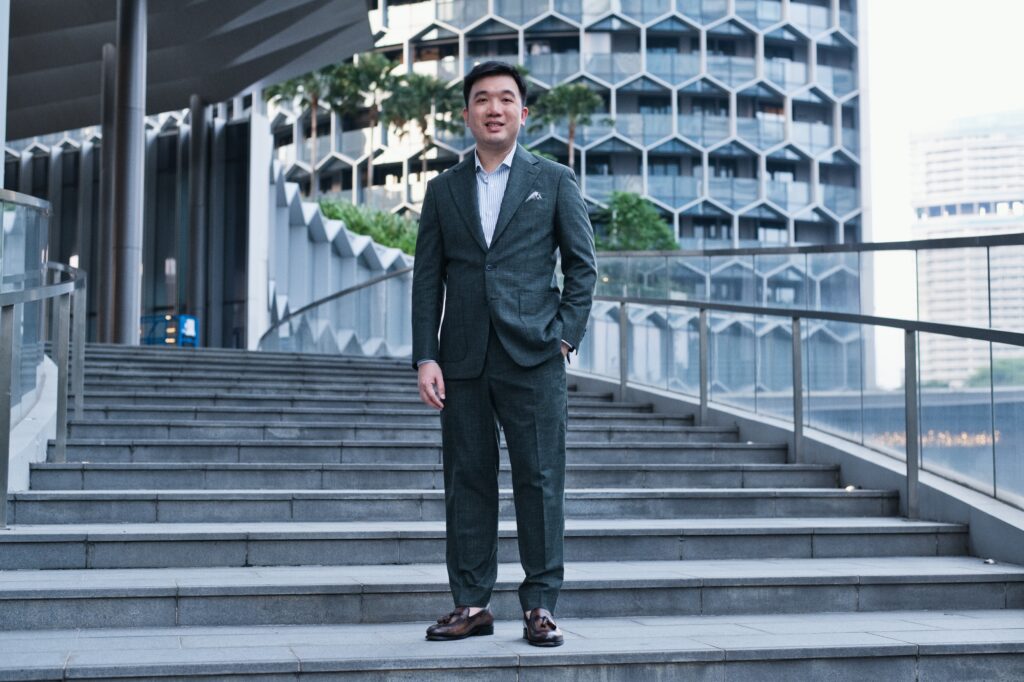
A relatively new outfit that opened its doors earlier this year, Stitch and Style invited me down to its showroom at the Interchange Building, located directly opposite Bangkok’s iconic Terminal 21. I headed over to put its tailoring services to the test and see what this newcomer has to offer — let’s see how my experience went.
Stitch and Style – the Experience
As mentioned earlier, Stitch and Style is located in the Interchange Building, right beside Asok BTS and Sukhumvit MRT.
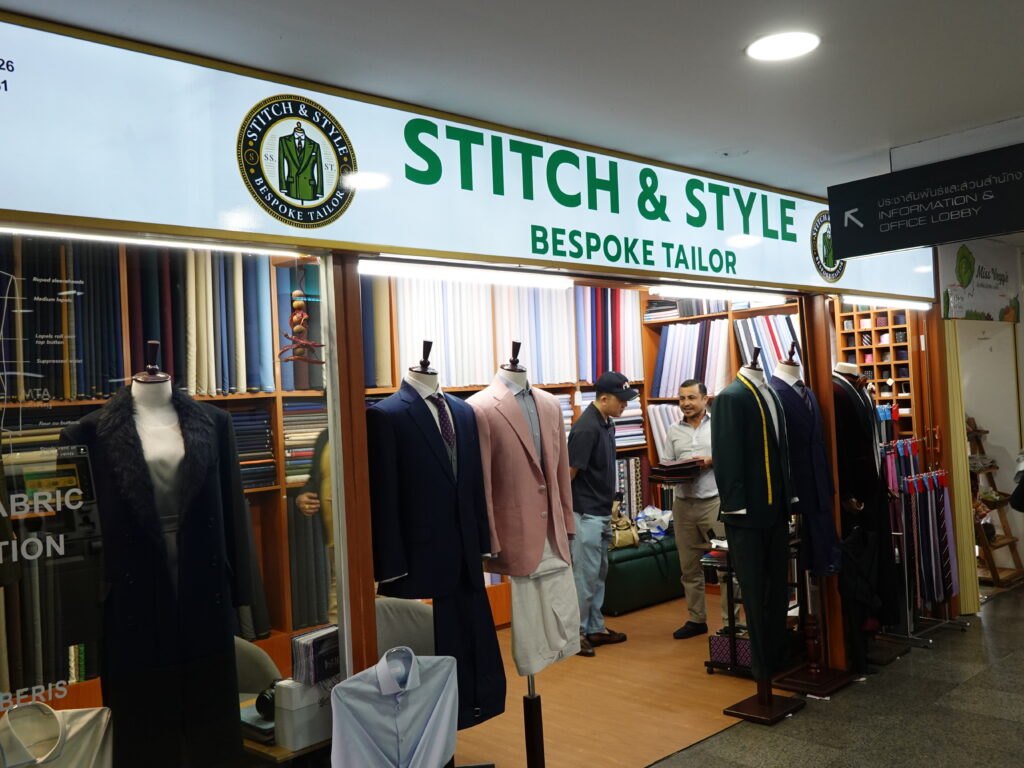
The showroom is located on the ground floor of the building, right beside the Sukhumvit MRT exit. Just look out for the bright white signboard—it’s hard to miss.
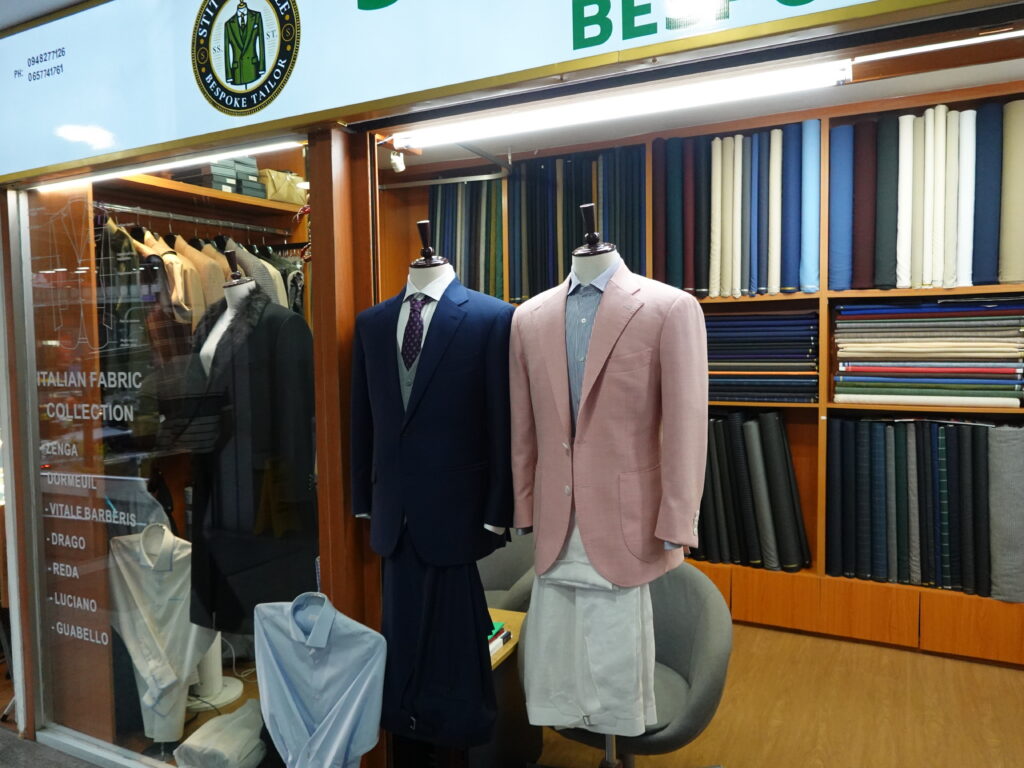
The first thing that caught my attention was Stitch and Style’s prominent display of Italian mills, such as Zegna, Dormeuil, VBC, Drago, Reda, and Guabello, across its shopfront. These mills aren’t offered by every Bangkok tailor, so seeing their names prominently displayed immediately gave me the impression that Stitch and Style was positioning itself as a more premium tailoring outfit.
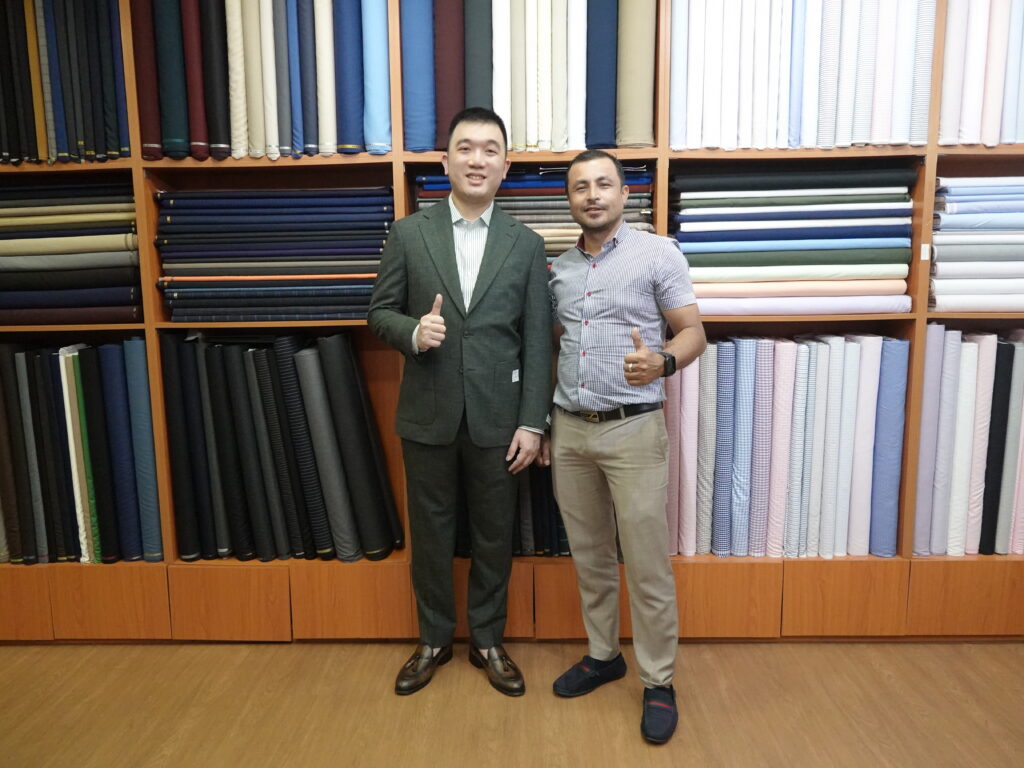
At the helm of Stitch and Style is Alex, who brings more than two decades of experience in the tailoring industry. Having entered the trade in 2003, he spent over 20 years honing his craft across various tailoring establishments before striking out on his own and launching Stitch and Style earlier this year.
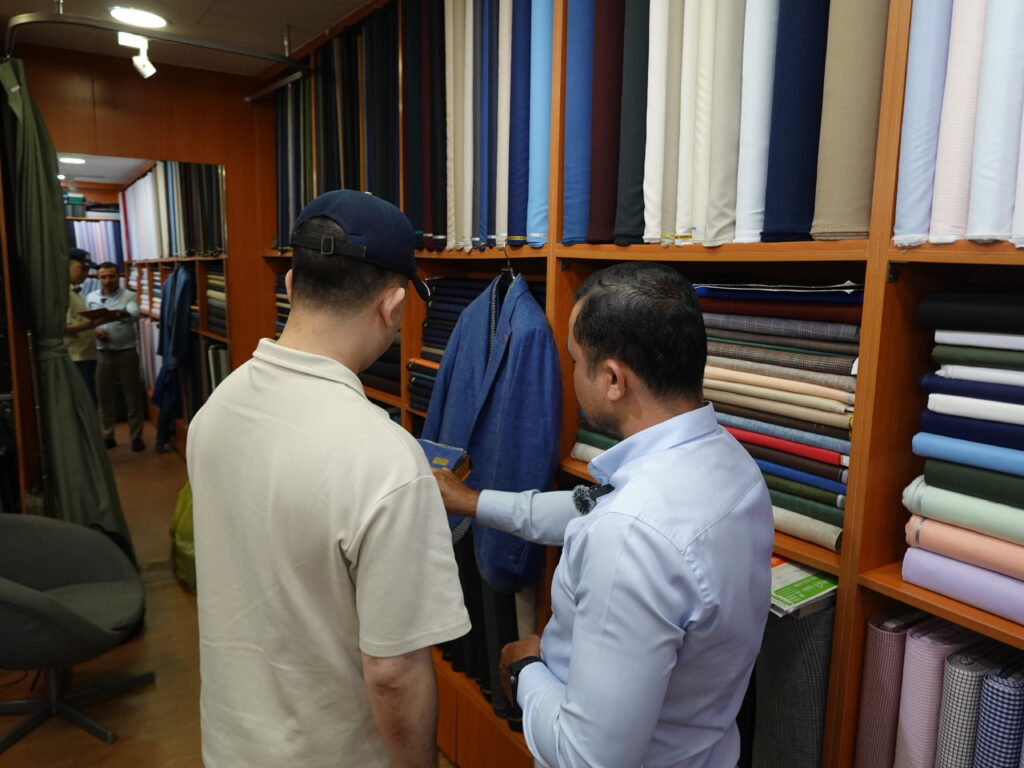
My first impression of the showroom was that it was a decent size—not particularly spacious, but certainly not cramped either. More impressively, the walls are lined with rolls of fabric, giving customers a wide selection to browse through and choose from.
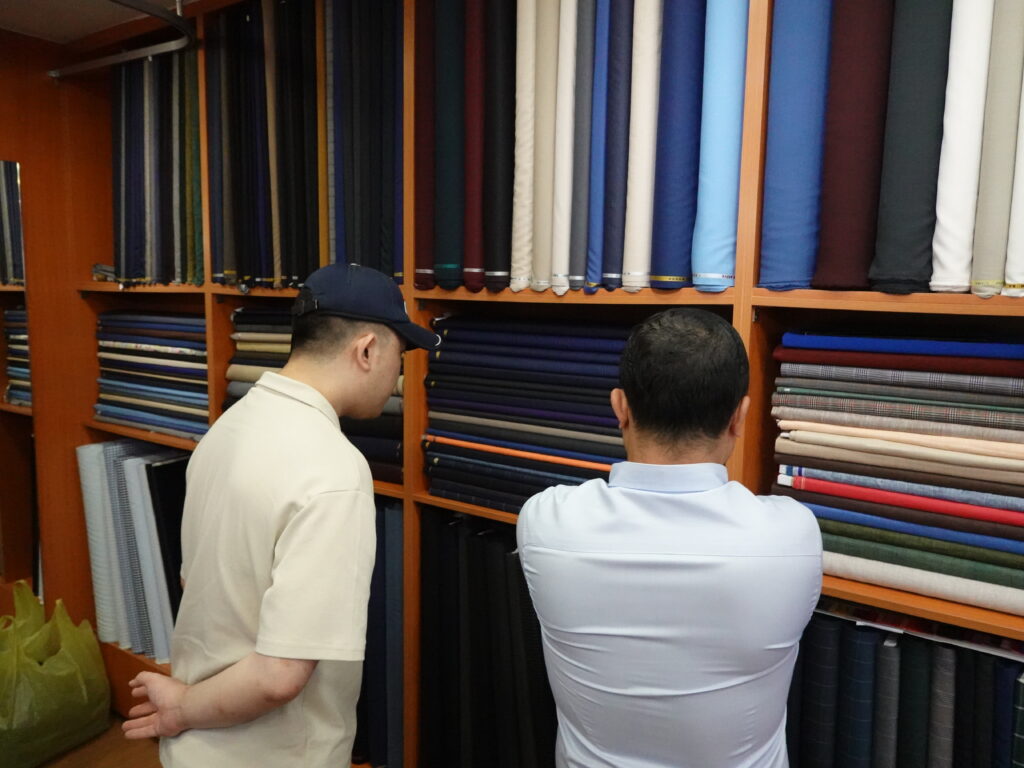
To start, Alex showed me some of his house fabrics. A two-piece suit from Stitch and Style starts at 6,000 THB (~S$228), although at this price point, the fabric options are predominantly polyester or low-quality linen.
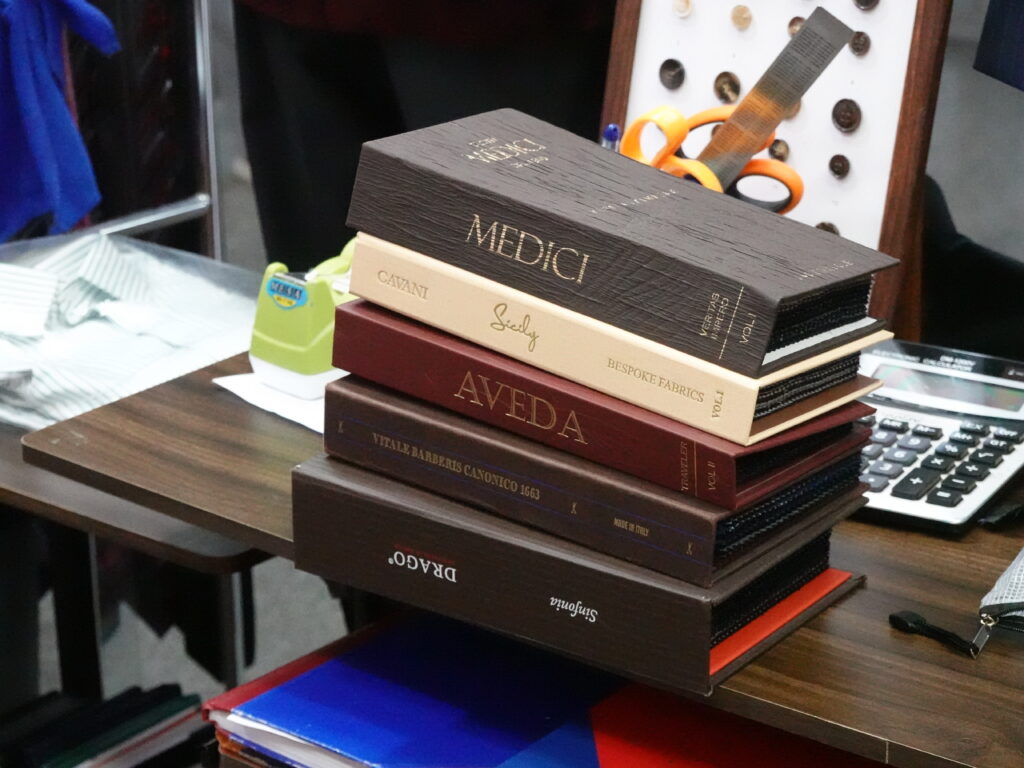
Given that prominent Italian mills are advertised on the storefront, I asked Alex to show me some of his Italian fabrics. He explained that due to the higher cost, such Italian fabrics are usually not available in fabric rolls (since it’s prohibitive for him to buy in bulk), and instead broke out fabric books from esteemed mills such as Drago and VBC, as well as more affordable alternatives such as Medici and Cavani.
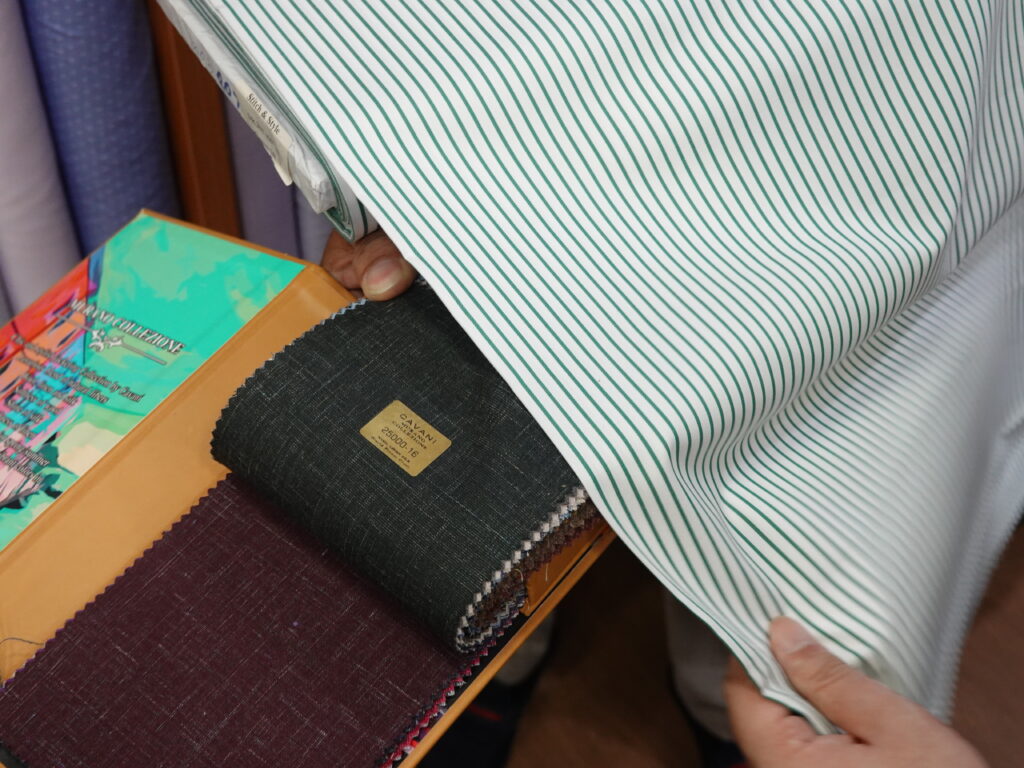
Of the bunch, the Cavani Sicily book immediately caught my eye. I recently made a chocolate-brown suit from the same collection and was impressed by the premium feel of the linen. This time, I was drawn to a textured green fabric. Green has always been a favourite for me. One of my most-loved suits was a green Irish linen suit from Meiko Tailor, but sadly, that was over six years ago, and the suit no longer fits. Alex agreed that the green fabric was a strong choice and then pulled out a white shirting fabric with green stripes, which he felt would complement the suit perfectly.
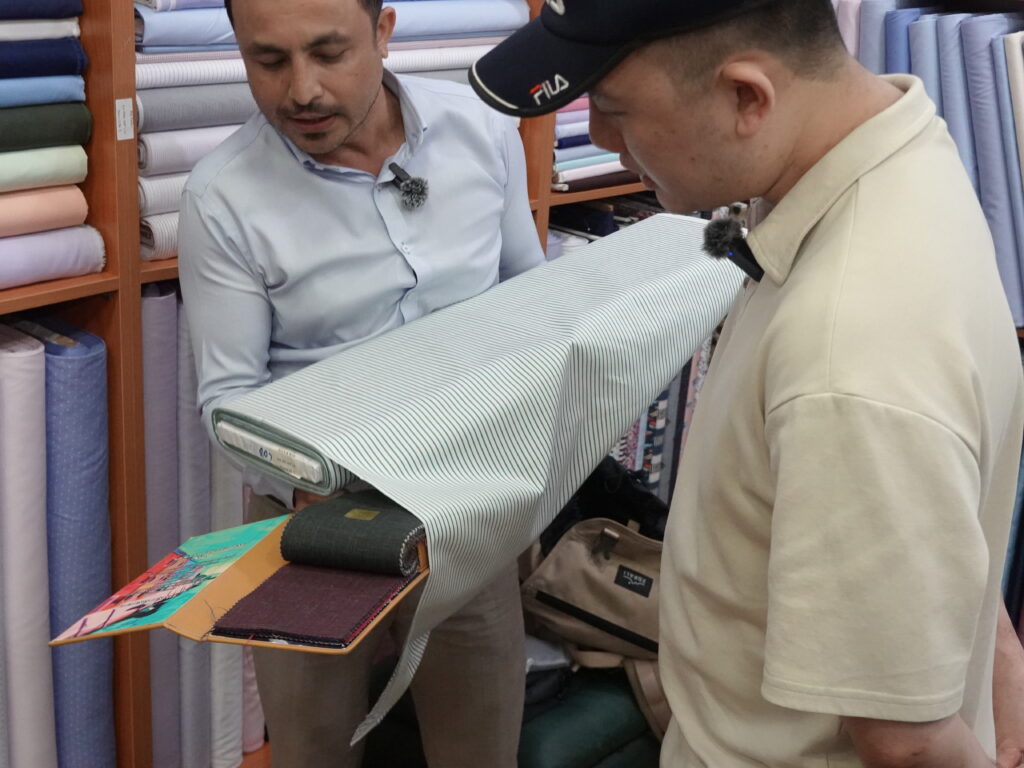
This was where Alex’s experience really shone through. Rather than simply agreeing with my choice of suiting fabric, he proactively picked out a shirting fabric that complemented it, effectively putting together a cohesive outfit for me. He also revealed that green is his favourite colour—aptly reflected in Stitch and Style’s green logo and branding—which gave me a chuckle and made it easier to trust his choice of shirting fabric.
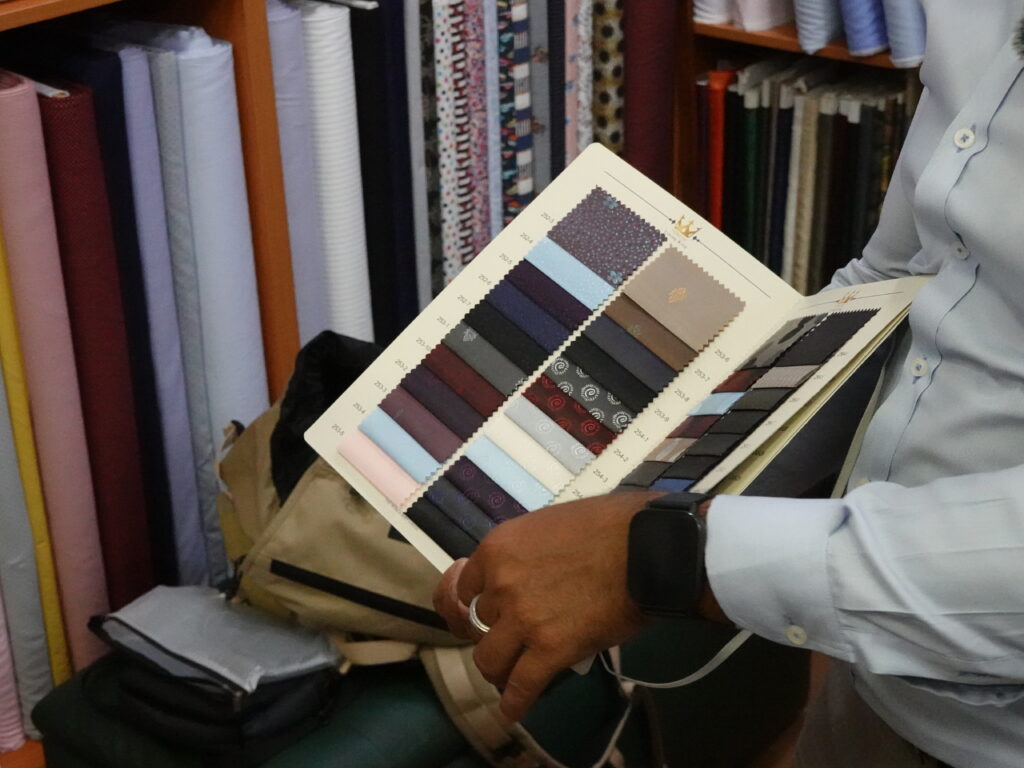
With the suiting and shirting fabrics settled, we moved on to the linings. Alex first showed me his standard selection, consisting mainly of polyester linings commonly found at more affordable tailoring establishments. However, since we had opted for a higher-quality suiting fabric, I asked if he had more premium lining options, such as cupro.
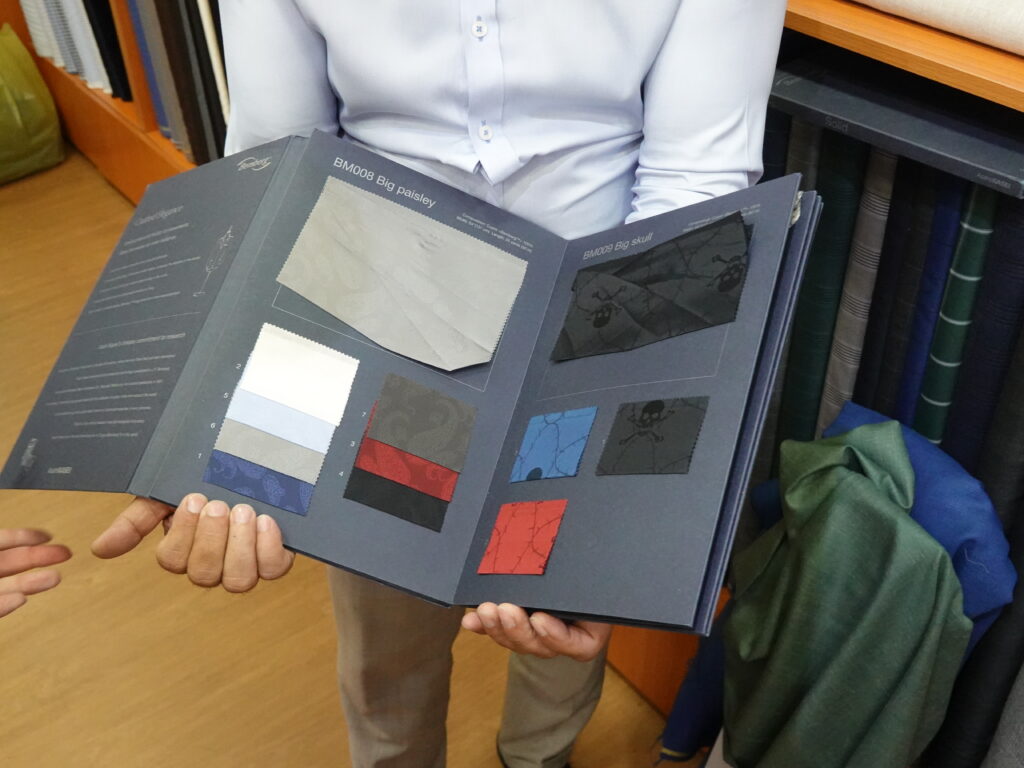
To my surprise, Alex then pulled out a book of Bemberg lining. For those unfamiliar with the material, Bemberg is the proprietary name for a type of cupro fabric produced by Asahi Kasei, a Japanese manufacturer. Known for its durability, breathability and silky-smooth feel, Bemberg is widely regarded as a premium lining material and is used by luxury brands such as Boss, Armani and Zegna. It is also a material I typically associate with higher-end tailoring houses. My aforementioned Meiko Tailor suit uses Bemberg lining, and despite having visited more than two dozen Bangkok tailors, Stitch and Style is only the second tailor I’ve come across that offers it—the other being Patrick & Co. Needless to say, this was a pleasant surprise.
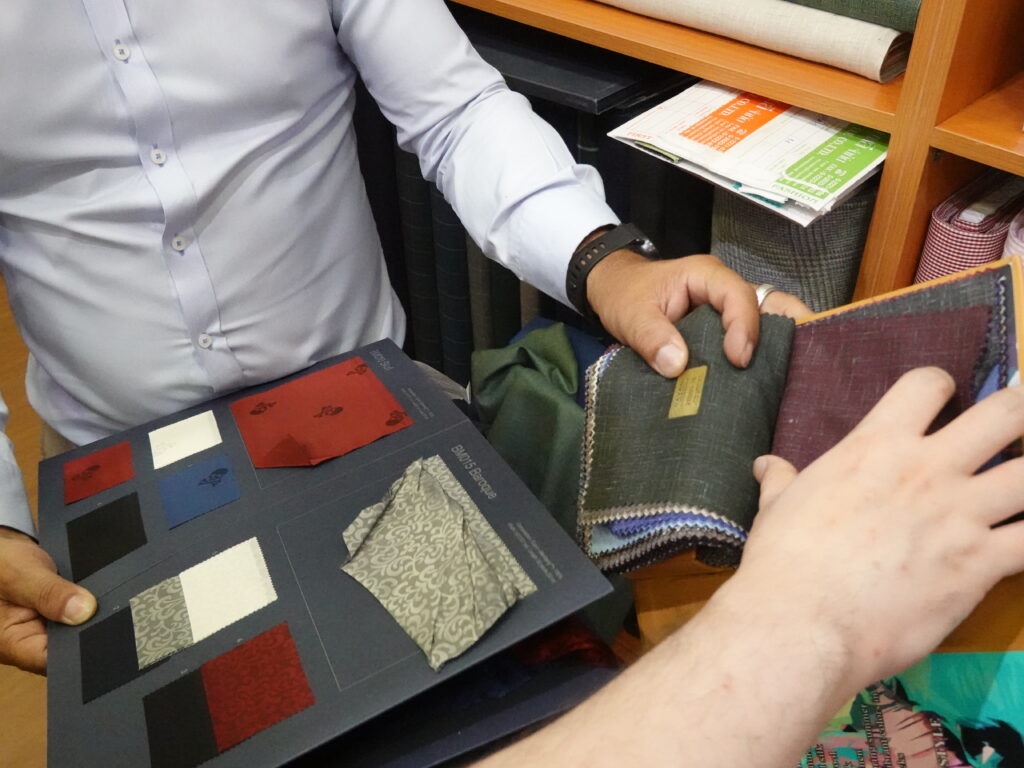
After poring over the Bemberg book, I eventually settled on a baroque-style silver lining, which I felt added a touch of flair to the jacket without being overly ostentatious. The Bemberg upgrade comes with an additional charge of 1,000 THB (~S$40), but I felt it was well worth the premium. It is also considerably more affordable than at Singaporean tailors, where Bemberg linings can often cost an additional S$100–200.
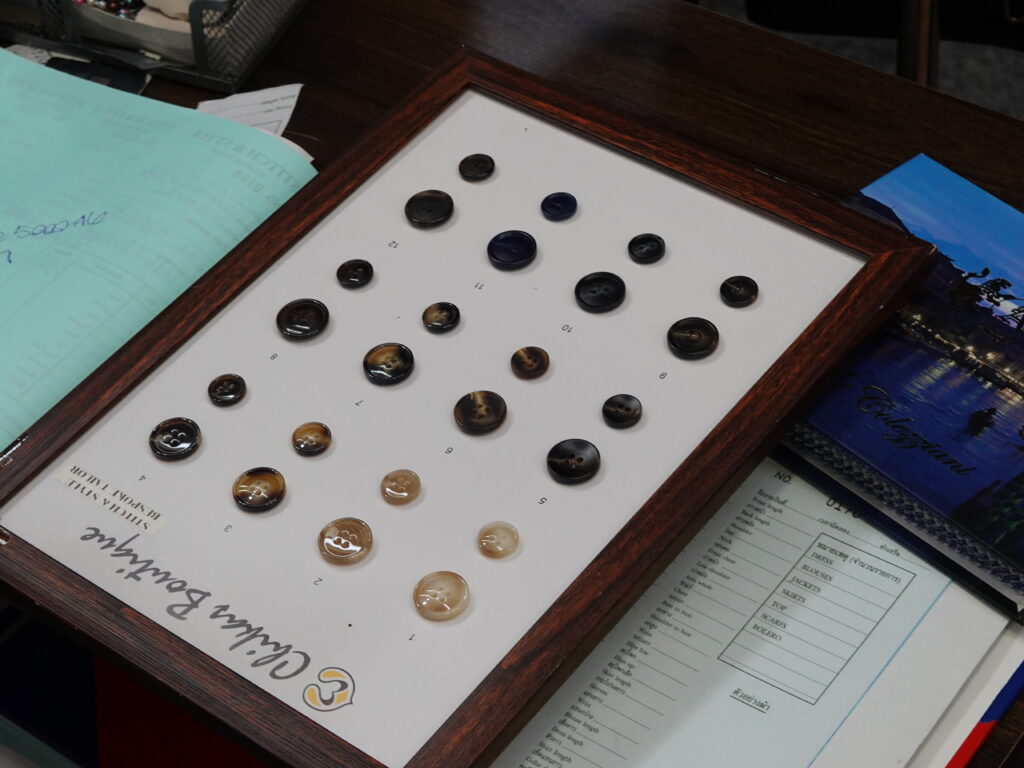
Next, we moved on to the buttons. Given that we had opted for a premium suiting fabric and Bemberg lining, Alex recommended going with genuine horn buttons to complete the look. However, instead of the regular brown, he suggested opting for blue horn buttons instead for a different touch. I’m always up for something different, so I happily accepted his suggestion.
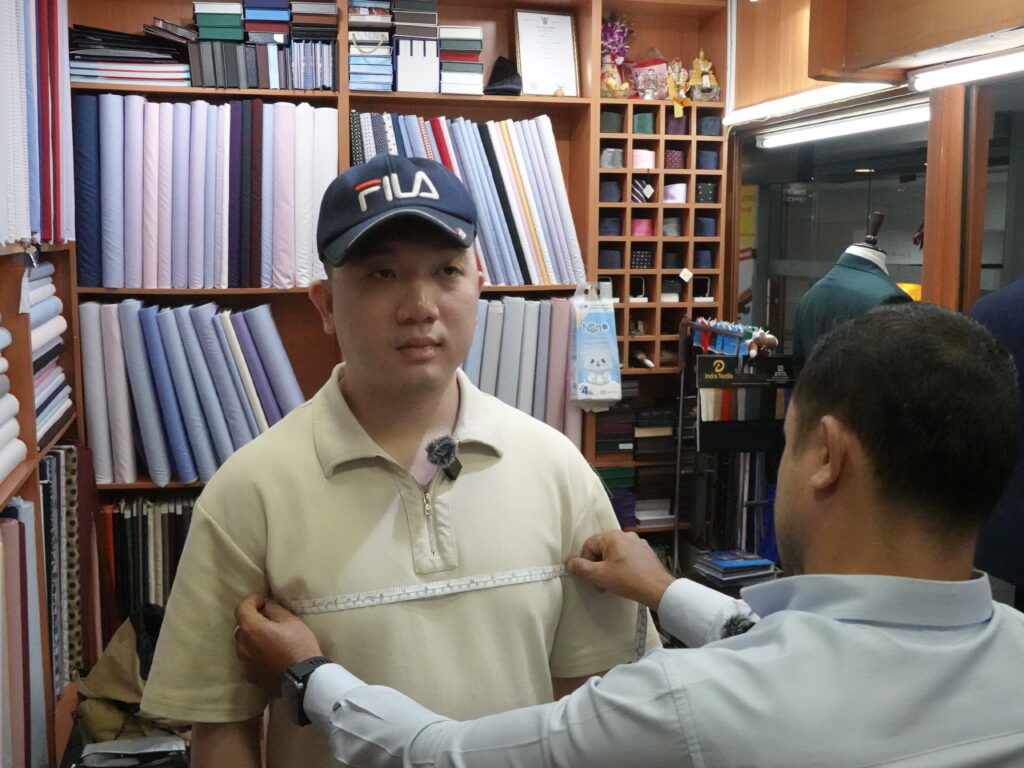
With the selections settled, we moved on to the measurements. Here, Alex largely depends on the traditional tape measure. As the process was fairly standard, I won’t go into details here.
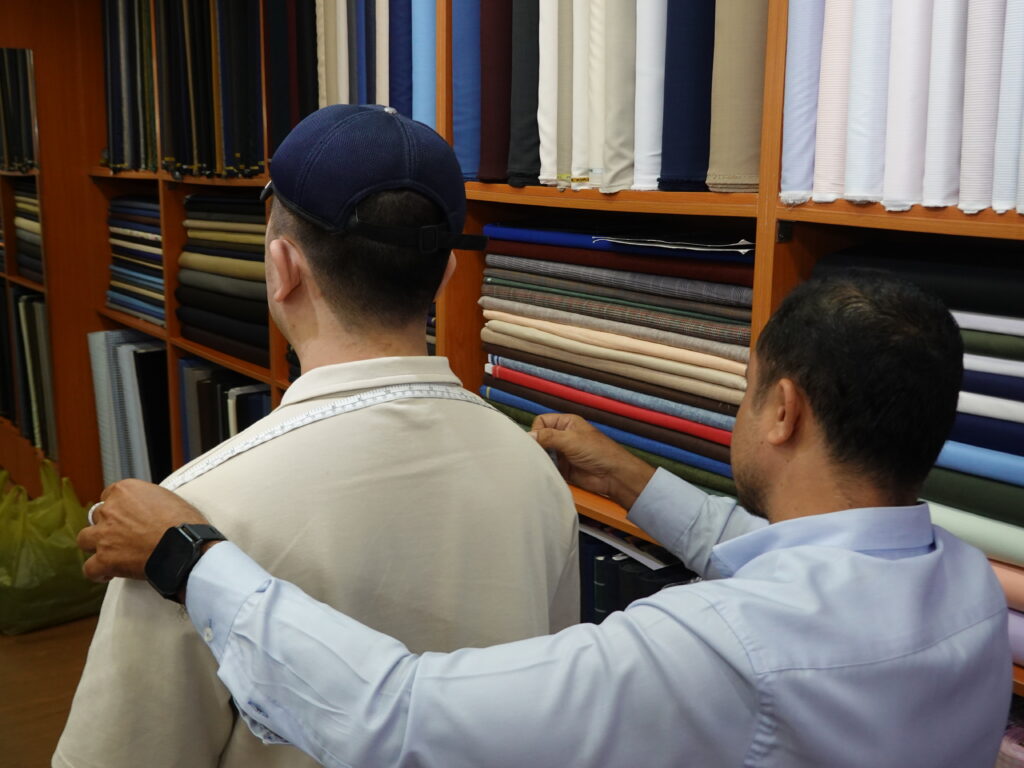
That said, it became apparent almost immediately that Alex was an experienced tailor. His decades of experience were evident in the quiet confidence and precision with which he took my measurements.
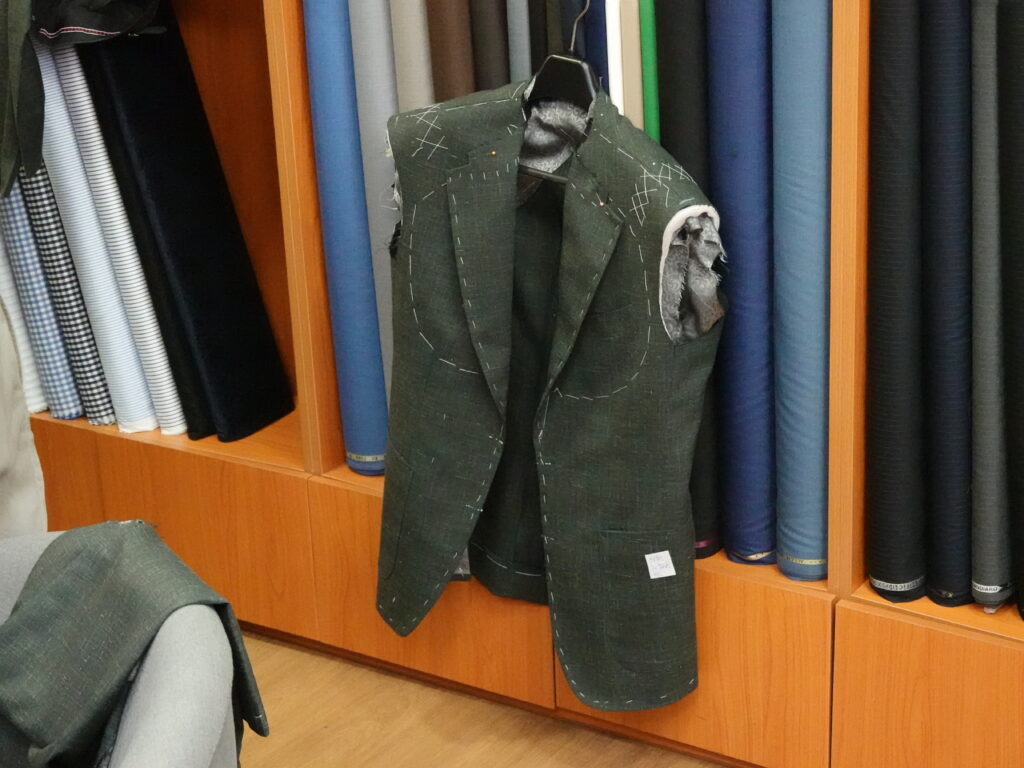
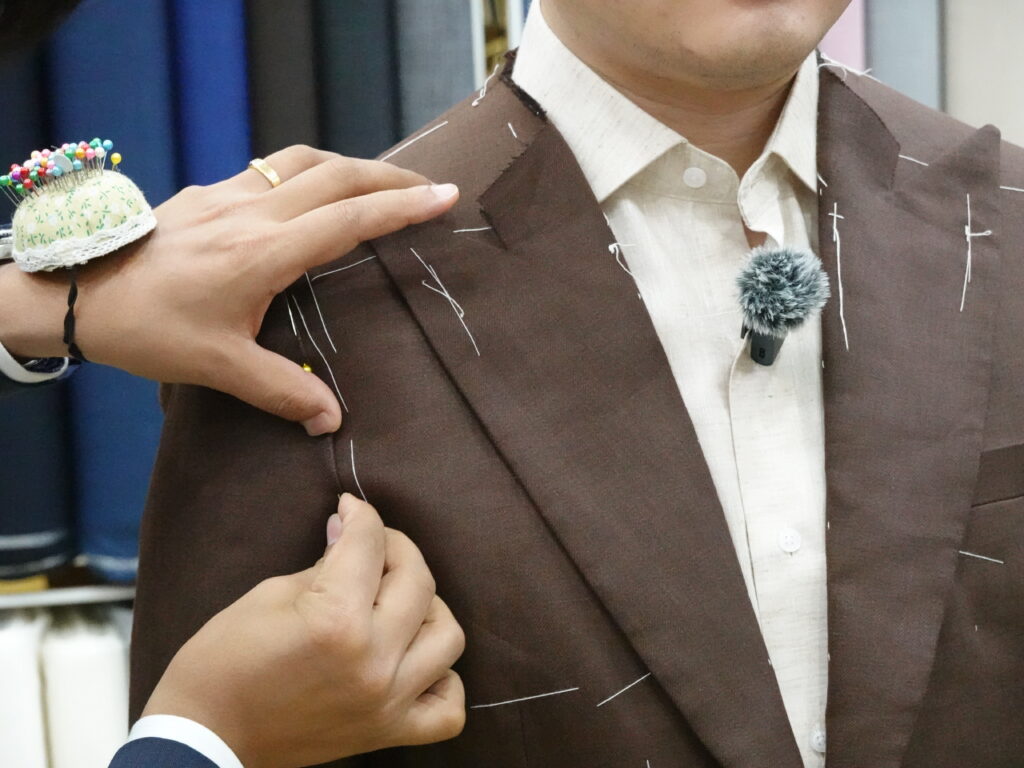
The next day, I returned to Stitch and Style for my basted fitting session. For those unfamiliar with the process, a basted fitting involves trying on a skeletal version of the jacket, held together with temporary white basting stitches. To learn more about the basted fitting, read this educational article here. Personally, I believe that a basted fitting is essential to a true tailoring experience. To quote a line from the article mentioned above: “It’s the difference between flying first class and flying on a private jet.
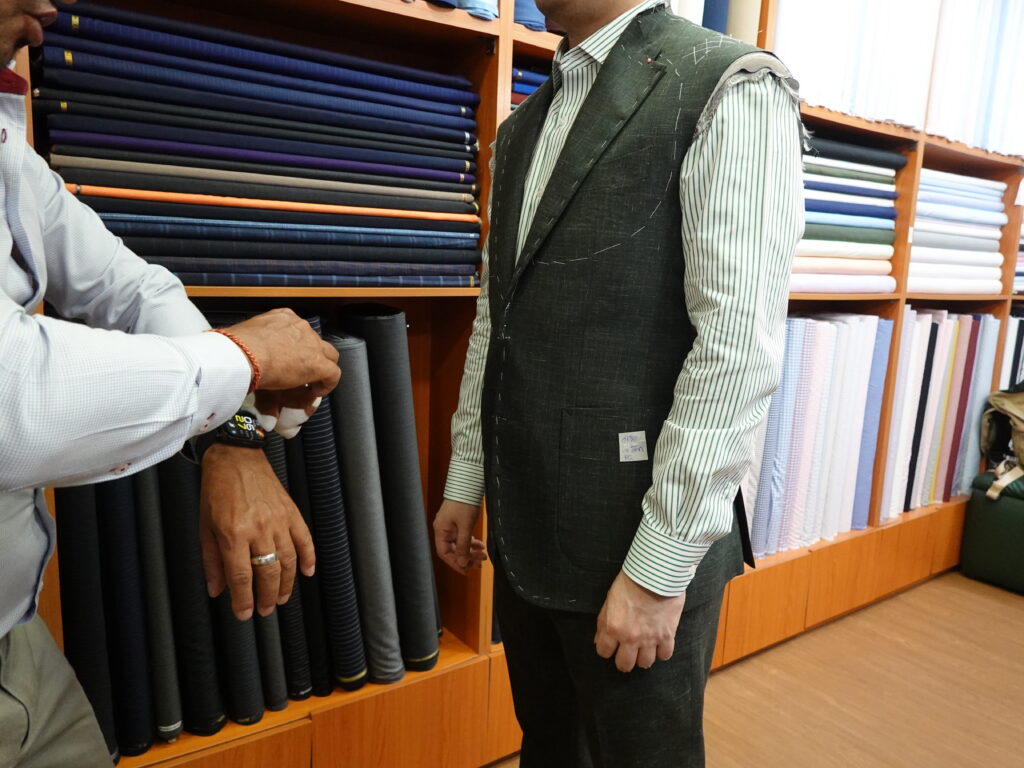
My first impression of the basted fitting jacket was positive. The shoulders sat cleanly, the tapering was evident, and the length (for both the jacket and shirt) was already spot on.
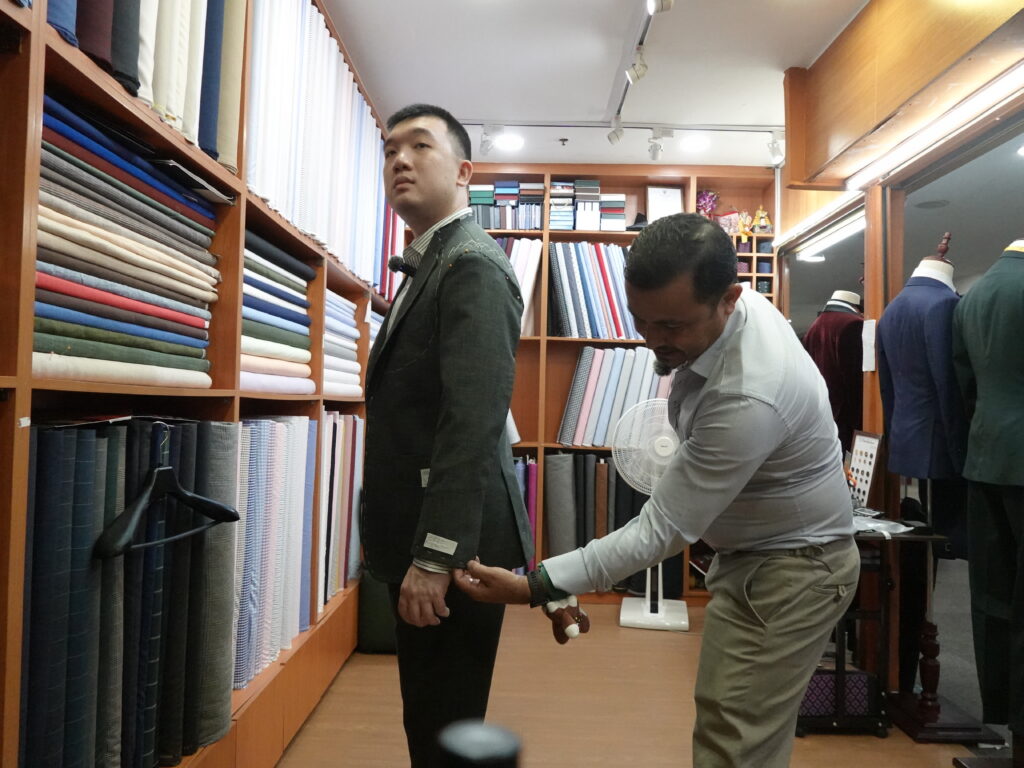
Thereafter, Alex attached the sleeves to the basted jacket—a common practice among Thai tailors that allows the sleeve pitch to be fine-tuned for optimal fit and balance. As you can see from the photo above, this approach meant the sleeve pitch could be dialled in from the very first fitting.
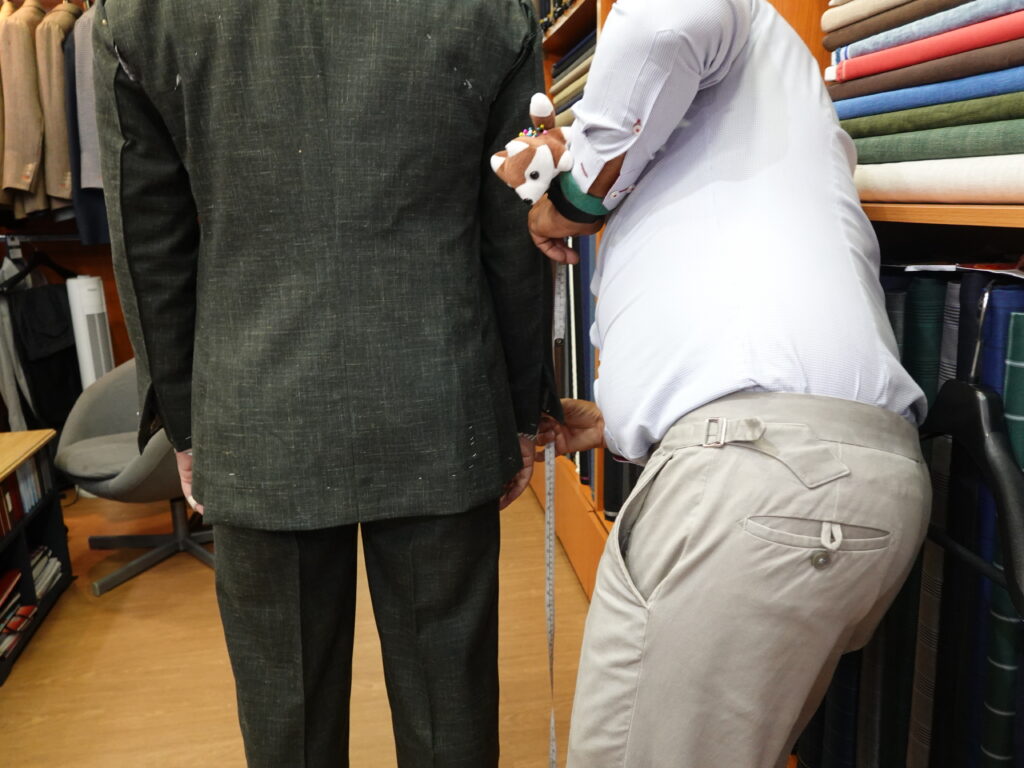
I was particularly impressed by how well the jacket fit at the first fitting. Even the back—which is usually a trouble spot for me—draped relatively cleanly right from the start. What makes this even more impressive is that the basted fitting jacket was completed in under 24 hours. By comparison, some Singaporean tailors I’ve visited have taken three to four weeks to prepare a jacket fitting, only to produce a less-than-satisfactory first fitting.
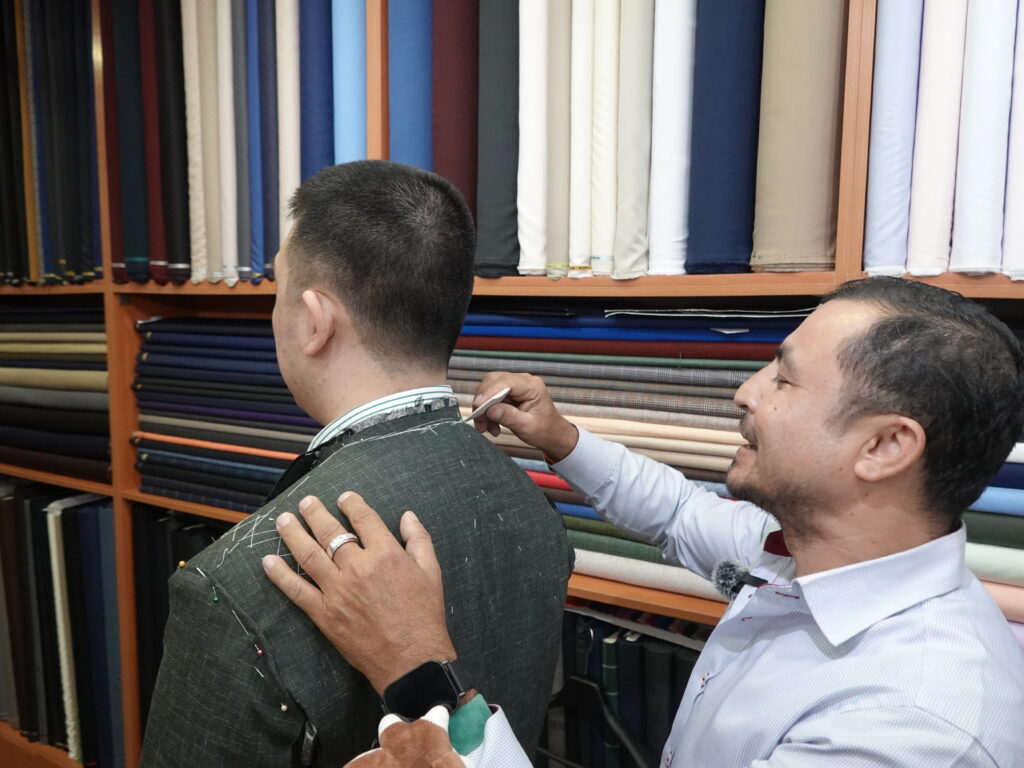
That said, Alex still felt there was room to further refine the drape at the back and carefully marked the necessary alterations with chalk—a quintessential tool in any tailor’s arsenal. This was a small but telling sign of his attention to detail. In my experience, some Bangkok tailors would be content to declare a fitting “good enough” and move on to the next stage, particularly when it comes to the back, which customers cannot easily assess themselves. Alex, however, took the extra step to identify and address an area that even I might not have noticed.
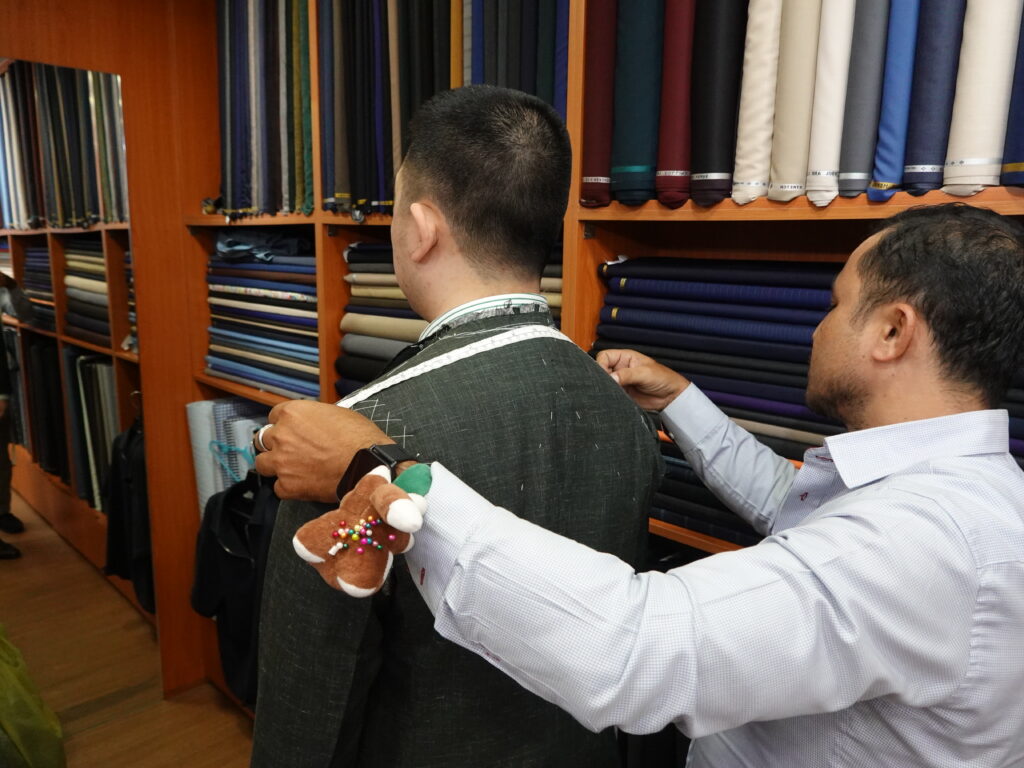
Alex wrapped up the fitting session by going over the suit’s key measurements once more, including the sleeve length, shoulder width and jacket length. The session took around 30 minutes—slightly longer than some of my previous experiences with Bangkok tailors—but I appreciated the extra attention to detail. Rather than rushing through the fitting to move on to the next customer, Alex took his time to ensure that the key measurements were properly dialled in.
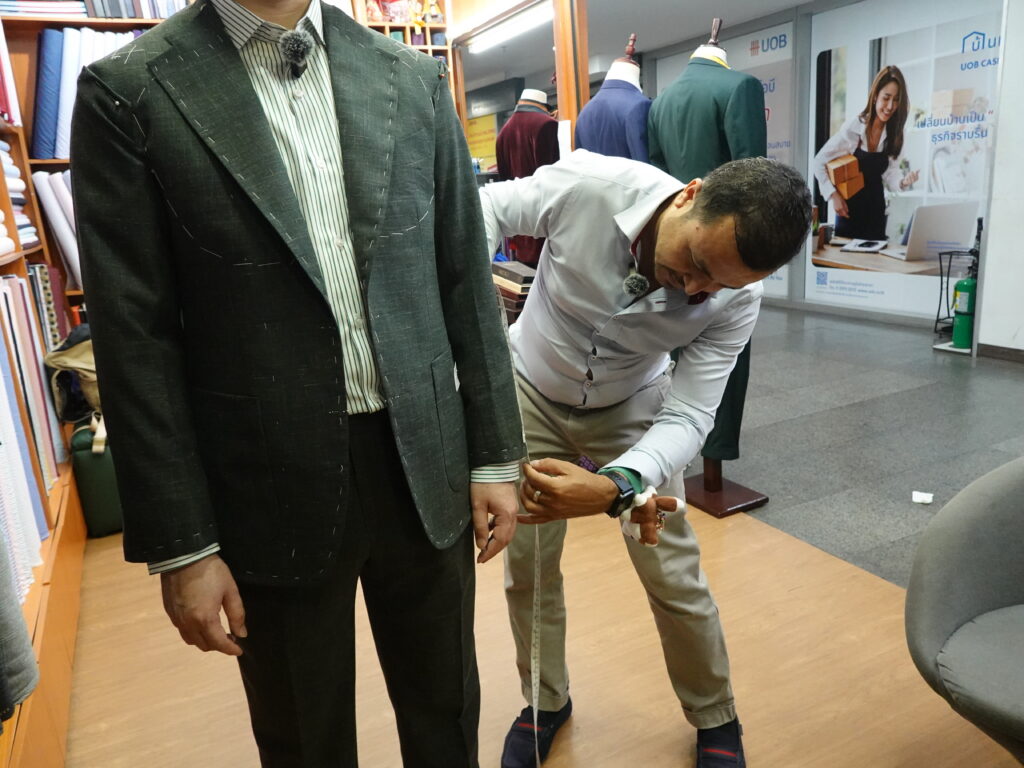
Having tailored more than 70 suits to date, I’ve reached a point where I can usually get a good sense of the finished garment from the fit and construction of the basted jacket alone. In this case, several details immediately stood out: the naturally rolling lapel (a good indication of genuine canvassing); the softly padded shoulders; and the roped sleeveheads, where the sleeve is slightly raised at the shoulder to create a subtle ridge—a hallmark of British tailoring.
At this stage, I was already confident that the finished suit would turn out well, even before seeing the completed garment.
Stitch and Style – Suit Review
But now that I’m back in Singapore, let’s take a closer look at the fit and finish of the completed suit from Stitch and Style.
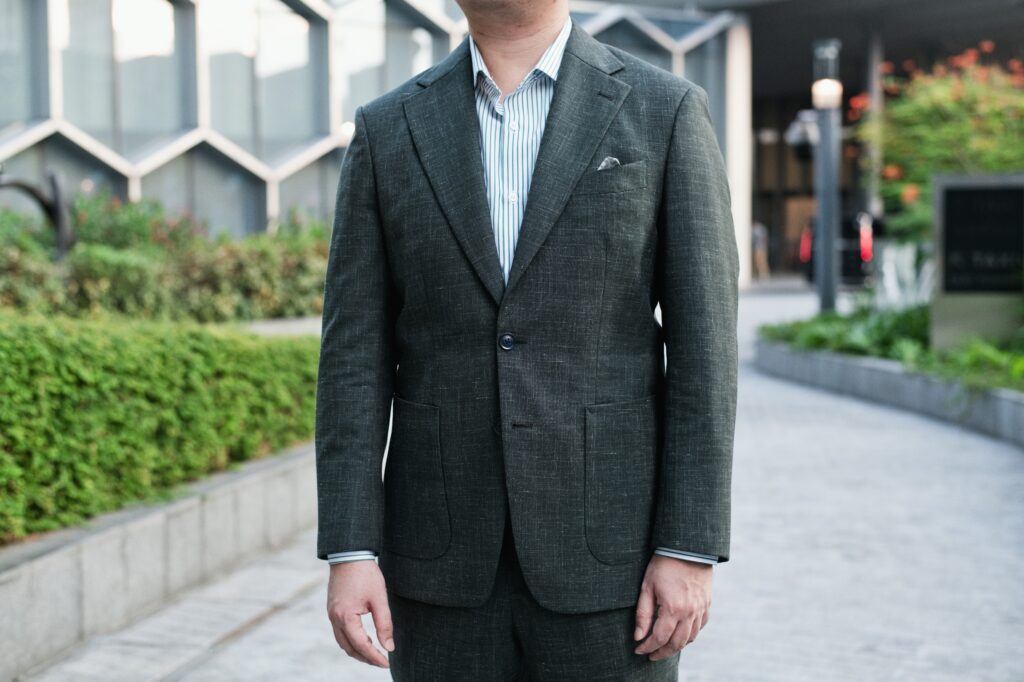
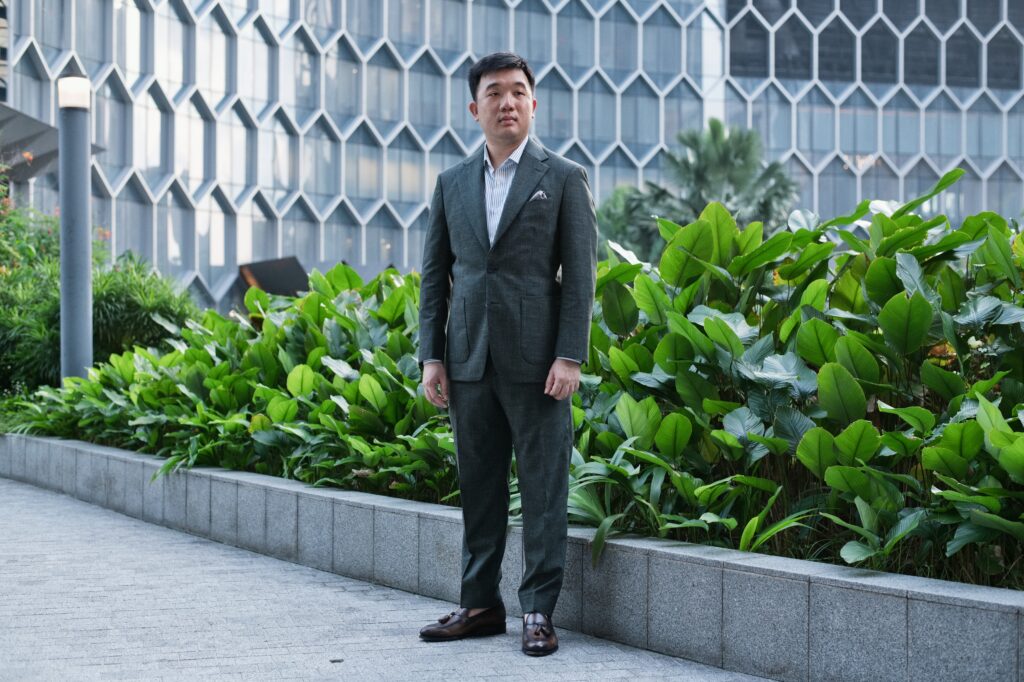
From the front, the jacket fits well, with cleanly seated shoulders and minimal wrinkling. The waist is nicely tapered, creating a refined, cinched silhouette, while the jacket length is spot on, ending just below the thumb bone.
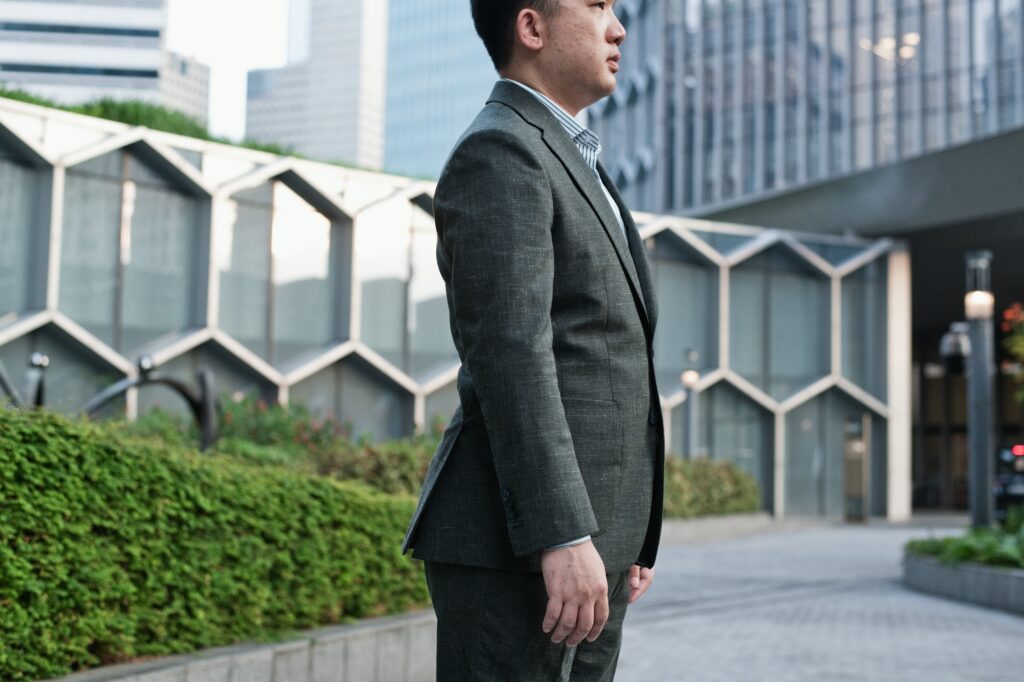
The sleeve pitch is also well executed, with the sleeves falling cleanly from the shoulders while allowing a comfortable range of motion. Even when bending my arms, I notice no pulling or restriction.

The back drapes equally well, accommodating my naturally arched back without any obvious fit issues. The few visible wrinkles are simply a characteristic of linen’s tendency to crease naturally, rather than a sign of any problems with the fit.
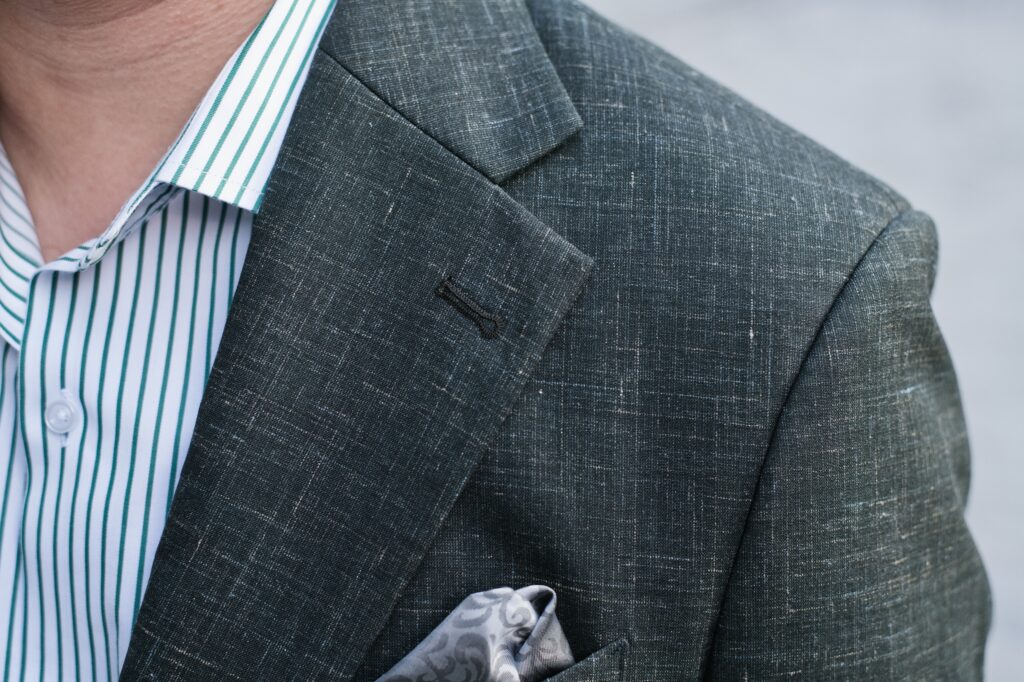
Since we’re on the subject of linen, it’s worth highlighting just how good this green Cavani fabric feels and looks. Like wool, linen comes in vastly different grades and qualities, which is why a linen shirt from Uniqlo can cost around $30, while one from Loro Piana can easily set you back more than $600. The same principle applies at Stitch and Style. While a basic linen suit starts at just 6,000 THB, this Cavani linen suit costs 12,000 THB—twice the price. In this case, I think the difference in fabric quality is readily apparent.
Unlike the scratchy, coarse feel often associated with cheaper linen, the Cavani fabric looks and feels distinctly more premium, with a rich texture that immediately stands out. It is breathable against the skin while retaining enough structure to ensure the jacket drapes cleanly without feeling overly flimsy.
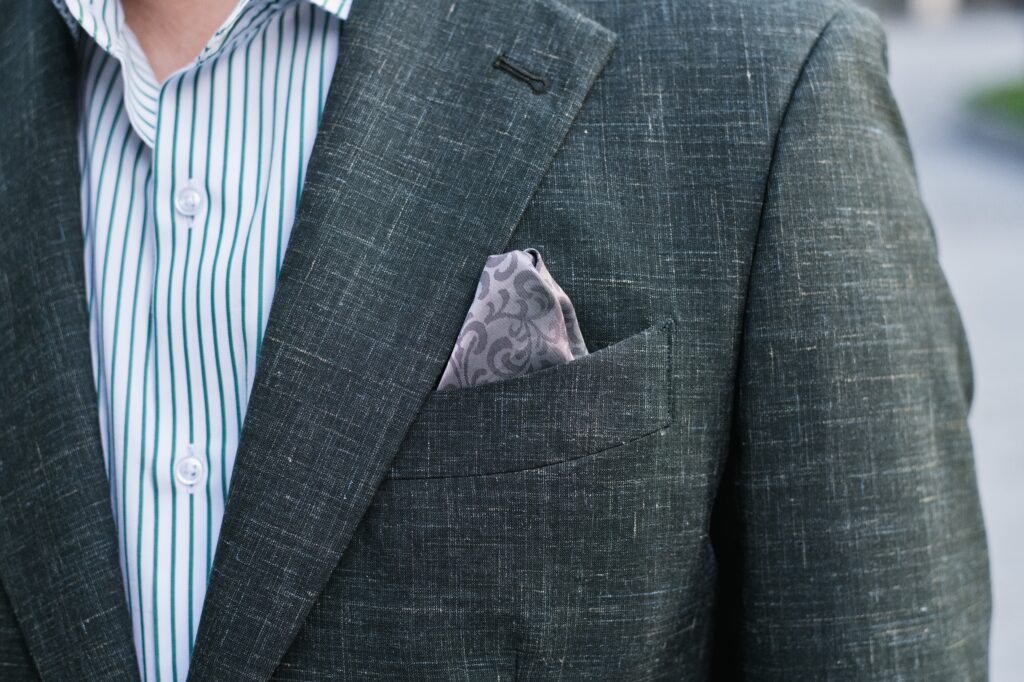
There are also several thoughtful details built into the jacket, including a barchetta breast pocket, a feature more commonly associated with bespoke tailoring, and an integrated pocket square for added convenience. I also appreciate the wide notch lapels, which add presence to the suit while still retaining its casual charm.
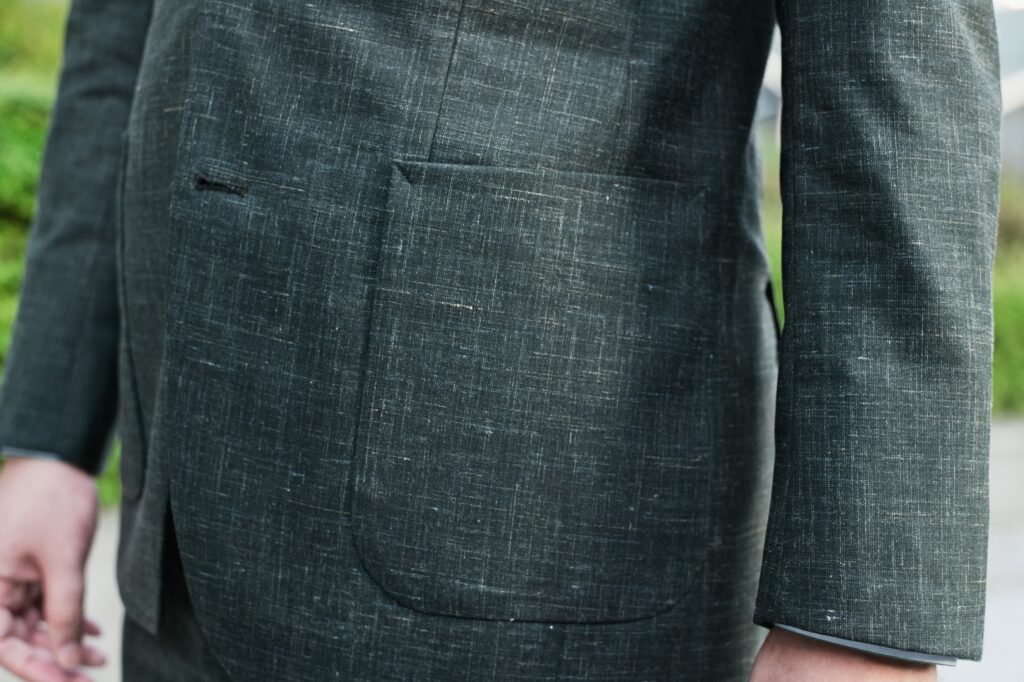
Given the more relaxed nature of a green linen suit, I opted for patch pockets to lean into the casual aesthetic. Interestingly, Alex made the patch pockets slightly oversized, giving the jacket a subtle retro character that I particularly liked.
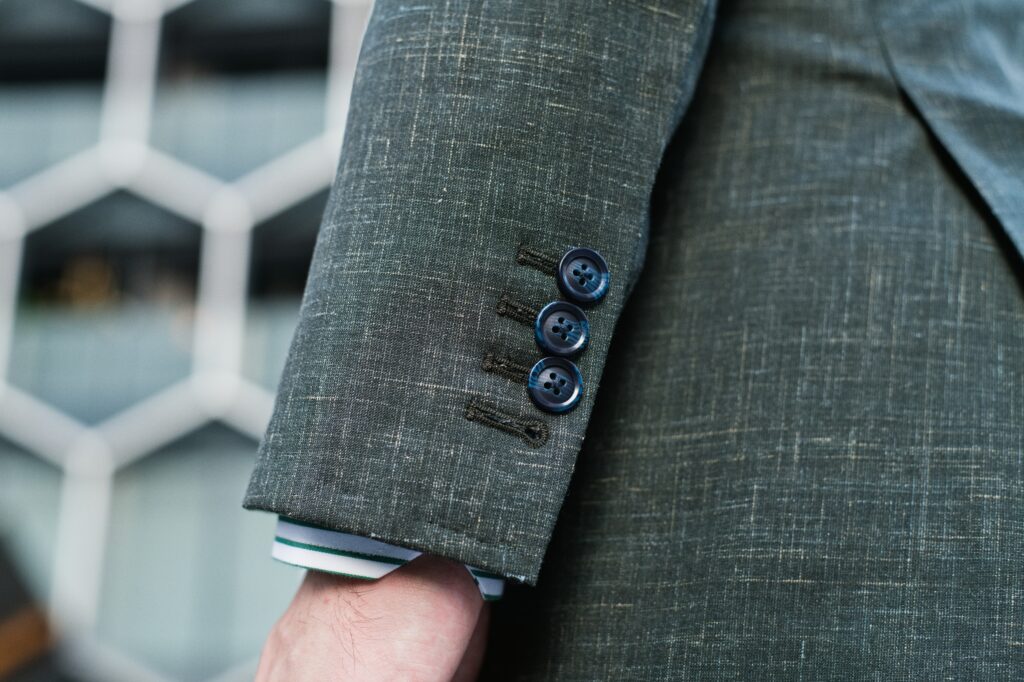
The jacket also features functional sleeve buttonholes, commonly known as surgeon cuffs, another hallmark of quality tailoring. The natural horn buttons have their own unique grain and texture, adding a subtle contrast against the green suiting fabric.
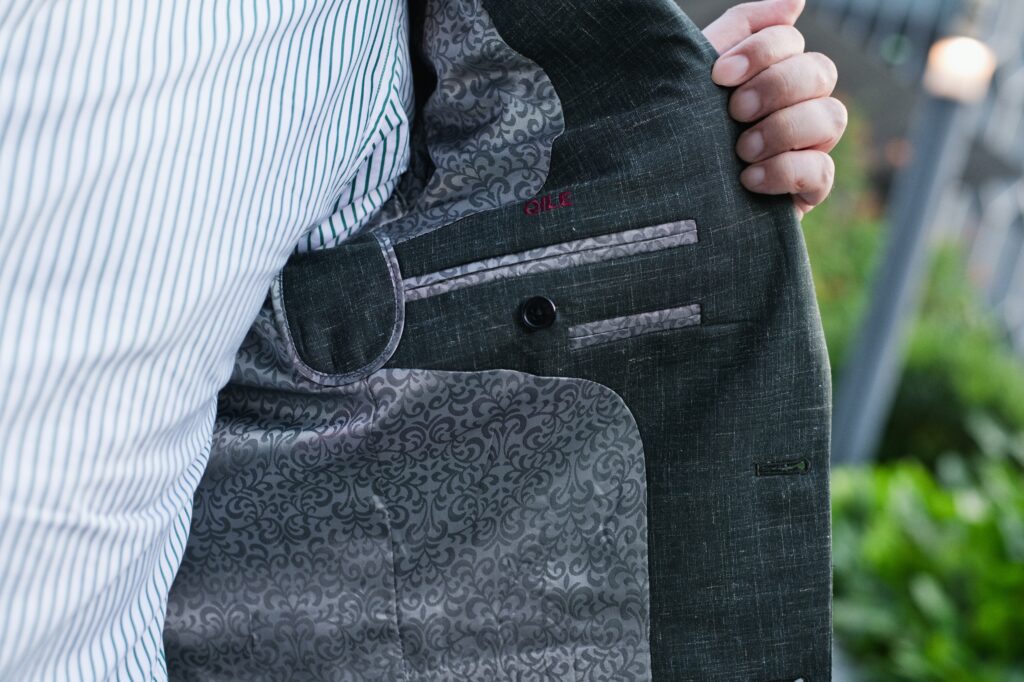
Inside, the silver Bemberg lining and its baroque pattern provide a much bolder juxtaposition against the green suiting fabric. As always, the Bemberg lining feels premium to the touch and enhances the suit’s breathability. Unfortunately, pipe stitching isn’t available here, which is a slight disappointment. I did, however, opt for a simple red monogram of my name for an extra touch of contrast.
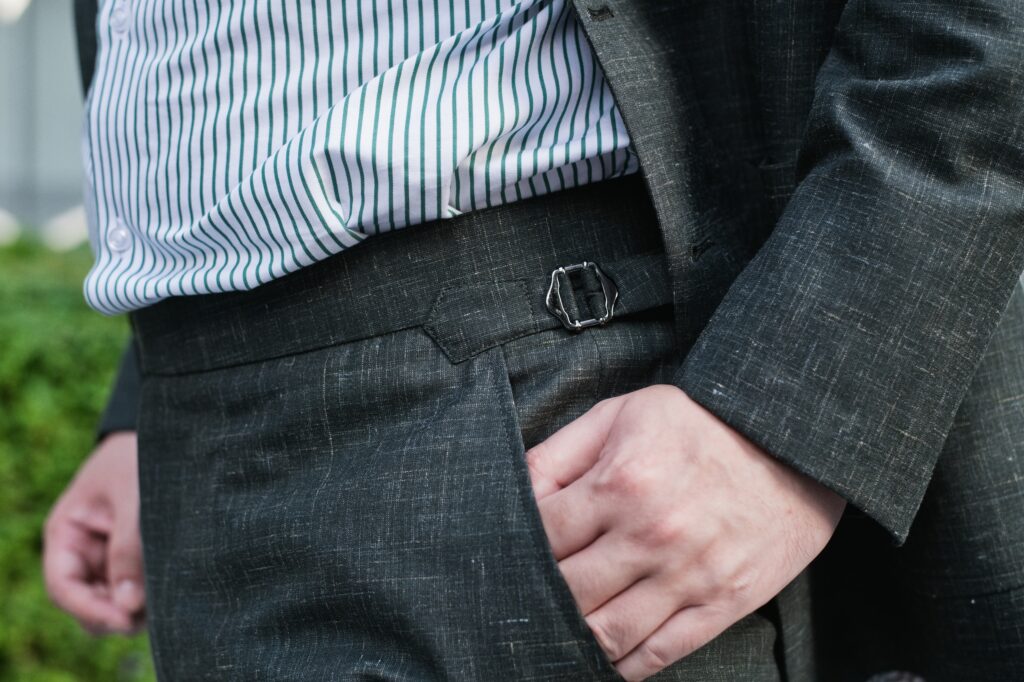
As always, I opted for side-adjusters instead of belt loops for a cleaner look.
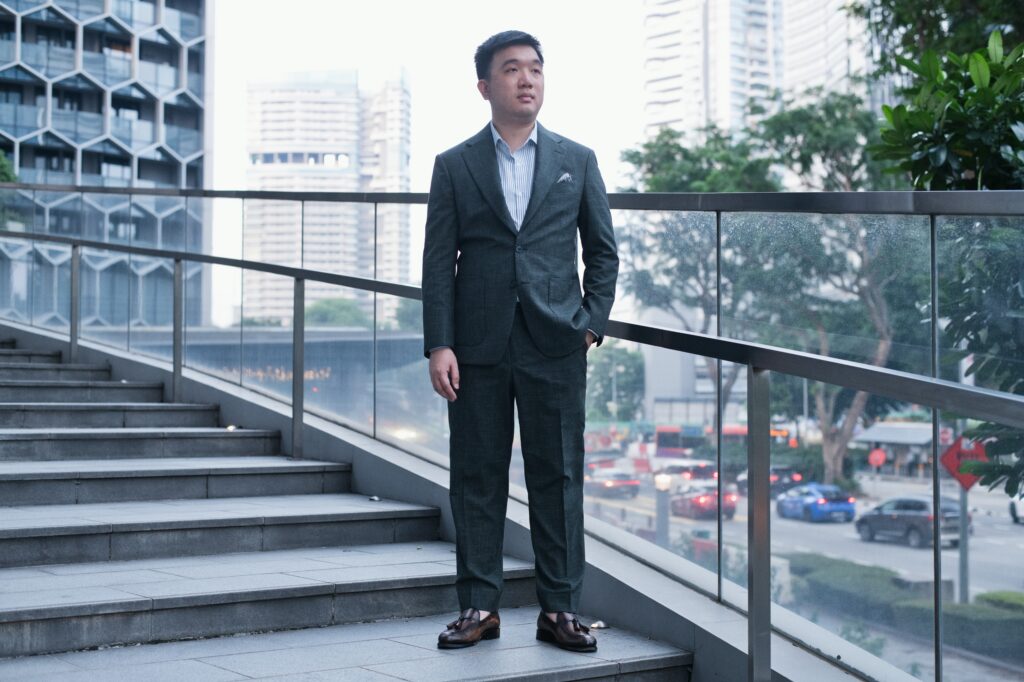
The cut leans distinctly British, particularly with the roped sleeveheads. It is more tapered than a traditional American cut, but not quite as close-fitting as a true Italian silhouette. The result is a classic, comfortably proportioned cut that feels timeless and understated—one that wouldn’t look out of place on an English country estate.
Conclusion — so Stitch and Style “shiok” or not?
Overall, I’m very happy with how my suit from Stitch and Style turned out. I particularly like the wide notch lapels, soft shoulder padding, oversized patch pockets and, of course, the Cavani linen fabric. There are also plenty of sartorial details to appreciate, from the barchetta breast pocket and functional sleeve buttonholes to the natural lapel roll. Despite being a premium fabric from the Cavani Sicily linen collection, the suit costs just 12,000 THB (~S$455), making it remarkably affordable for this level of fabric. For comparison, the other Cavani linen suit I recently had made cost 16,000 THB. Even with the additional 1,000 THB upgrade for Bemberg lining, the total still comes in below S$500. At that price point, Stitch and Style offers a compelling value proposition, particularly when you consider the quality of the materials, the attention to detail, and Alex’s two decades of tailoring experience.
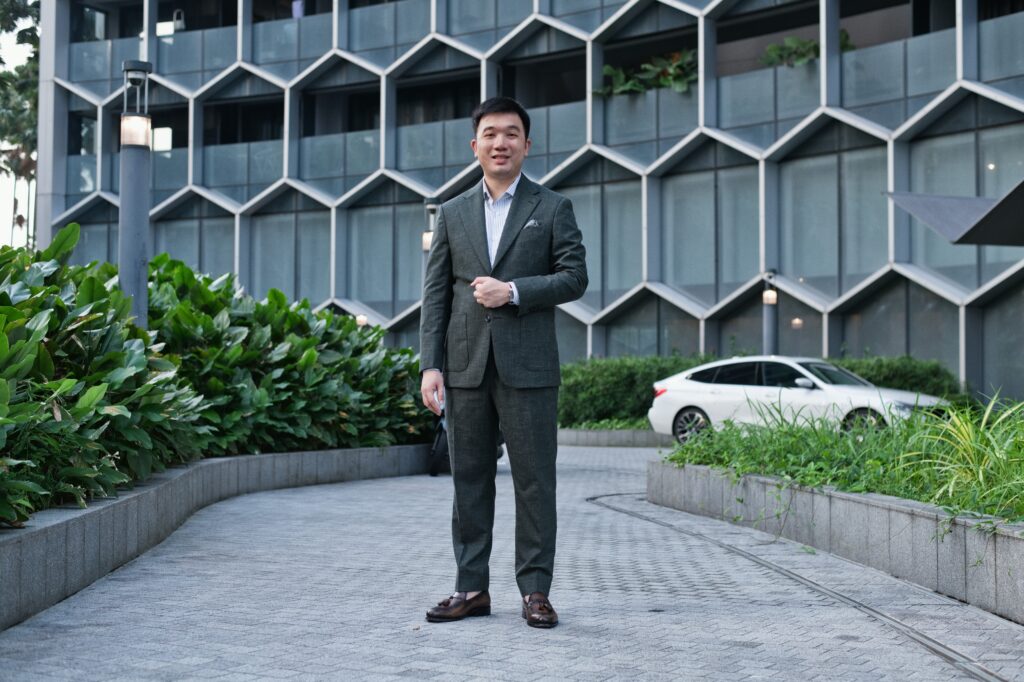
Suits at Stitch and Style start from 6,000 THB (~S$228), while shirts start from 1,000 THB (~S$38). My Cavani linen suit came to 13,000 THB (~S$495), including the Bemberg lining upgrade, while the accompanying shirt cost 1,000 THB.
If you’re interested in commissioning a suit or shirt, simply quote the promo code ‘WAHSOSHIOK’ or show this post in-store to enjoy 10% off your total purchase. That brings the starting price of a suit down to just 5,400 THB (~S$205). While the entry-level options are certainly affordable, I’d recommend considering some of Stitch and Style’s higher-quality fabrics—their selection is particularly impressive.
Book an appointment with Stitch and Style here.
Stitch and Style’s Location: 399 Interchange Building, G Floor, Unit M4-M8, Sukhumvit Road, Khlong Toei Nuea, Wattana, Bangkok 10110
P.S. Shiok is a common word Singaporeans use to express admiration or approval. As of 2016, you can find the definition of the word in the Oxford English Dictionary.
P.S.S. If you haven’t already, do follow my social media channels on Facebook here, on Instagram here, and on Youtube here.